
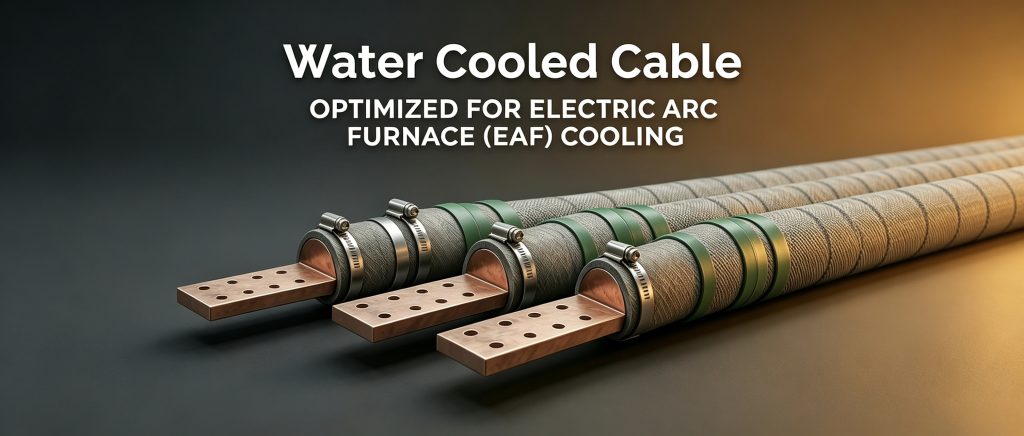
In the modern metallurgical industry, whether for low-carbon, short-process electric arc furnaces (EAF) or precision-controlled ladle refining furnaces (LFR/LF), electric power serves as the core energy source driving production. Water-cooled cables—which connect transformers to electrodes and transmit massive currents—act as the absolute “lifeline” of the entire power supply system.
However, equipment maintenance managers frequently grapple with a major headache: the frequent damage to water-cooled cables and their outer protective hoses. If a water-cooled cable suffers burn-through, leakage, or vibration-induced abrasion during the steelmaking process, it not only puts hundreds of tons of molten steel at risk of being scrapped but also triggers unplanned production line shutdowns, resulting in incalculable economic losses.
Why are water-cooled cable hoses so prone to damage? Given the vastly different extreme operating conditions of LFRs and EAFs, how can equipment service life be significantly extended through customized “specialized sheath structures” and “shock-absorbing buffer kits”?
Why do water-cooled cables on refining furnaces and electric arc furnaces (EAFs) fail so frequently?
The protective hoses encasing these water-cooled cables operate in the harshest “eye of the storm” within the electric furnace workshop, facing two severe challenges to their durability:
01. Extreme Thermal Radiation and Molten Steel Slag Splatter
The processes of melting and oxygen-blowing refinement generate intense thermal radiation and sprays of red-hot steel slag. Standard exposed rubber jackets—upon contact with slag reaching temperatures of over a thousand degrees Celsius—can instantly suffer burn damage, carbonization, or even burn-through; this leads to internal cooling water leakage and poses a risk of serious safety accidents.
02. Mutual Friction Caused by Intense Electromagnetic Vibration and Mechanical Oscillation
During operation, the furnace carries alternating currents of tens of thousands of amperes, generating powerful alternating magnetic fields that cause violent electromagnetic attraction and repulsion vibrations between the cables. Compounded by the high-frequency lifting and tilting of the EAF electrode arms, these extra-long cable hoses (such as heavy-duty hoses exceeding 10 meters in length) undergo severe impacts and abrasive friction against surrounding equipment or adjacent cables during oscillation, causing the hose walls to rapidly wear down and thin.
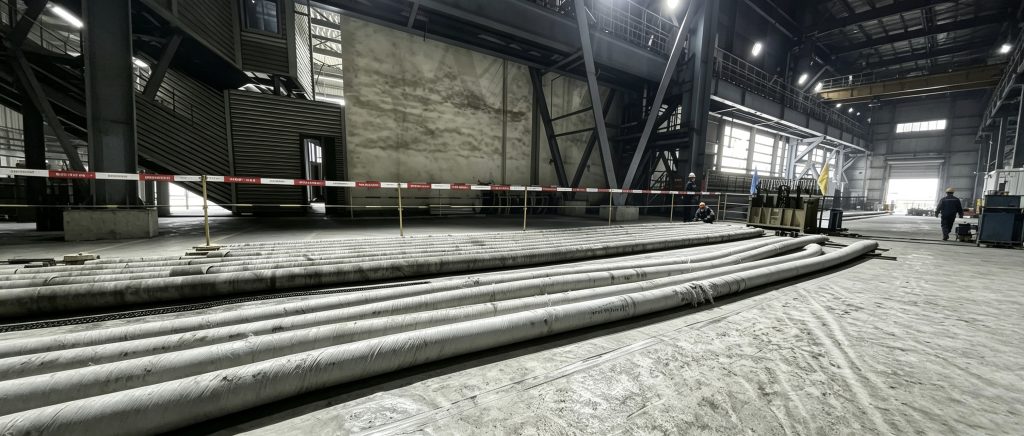
Differentiated “Armor” Designs for LFR and EAF Hoses
To fully overcome the aforementioned limitations, modern metallurgical power supply systems have moved away from using standard, uniform rubber hoses. Instead, they employ precision-engineered, differentiated designs tailored to the specific operating environments of LFRs (Ladle Refining Furnaces) and EAFs (Electric Arc Furnaces):
01. LFR Cable Hoses: Incorporating an FV-Type Fiberglass Protective Layer
LFR operations demand exceptional thermal protection and electrical insulation. Hose designs for LFRs typically feature a high-quality, carbon-free rubber core overlaid with a deeply bonded, high-performance fiberglass protective layer (FV type) known for superior insulation and fire resistance. This dense “fire-resistant suit” effectively blocks external high-temperature radiation and inhibits heat transfer, ensuring the stable circulation of cooling water and the safe operation of internal high-current conductors within optimal temperature ranges.
02. EAF Cable Hoses: Upgrading to an HD-Type Heat-Insulating, Wear-Resistant Heavy-Duty Layer
Due to their higher tonnage and power output, EAF cables must withstand not only molten metal splashes but also immense mechanical tension and swinging stresses. Consequently, heavy-duty EAF hoses—often exceeding 10 meters in length—have generally been upgraded to HD-type rubber hoses featuring a specialized dual-layer design for heat insulation and wear resistance. This heavy-duty structure offers remarkable flexibility, allowing it to easily absorb fatigue stresses caused by wide-arc swinging while providing a rugged, highly abrasion-resistant outer shell capable of withstanding physical impacts.
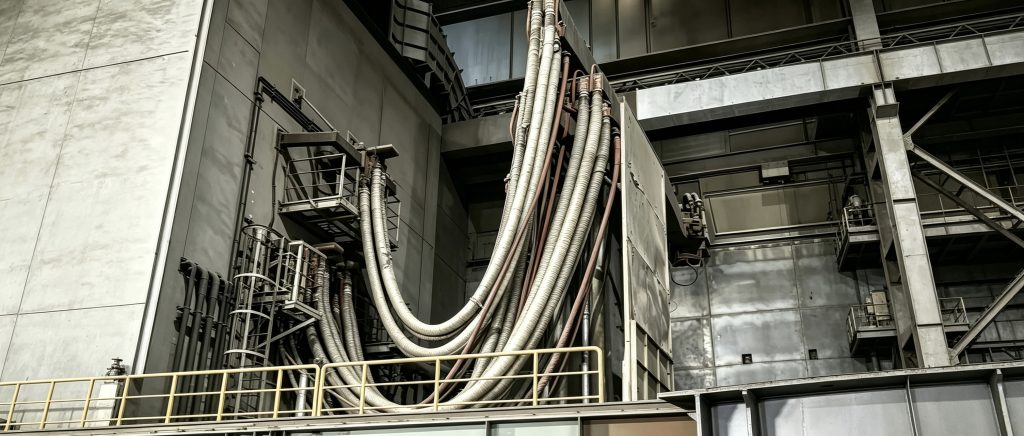
Comprehensive Protection with Professional “Bumper Blocks and Sealing Kits”
Upgrading the hose body alone is insufficient; true industrial-grade protection lies in an accessory system that is “armored to the teeth”:
High-Strength Bumper Kits: To counter electromagnetic vibrations caused by high currents, the industry’s leading solution involves fitting professional rubber bumpers onto the hose exterior. These bumpers (such as heavy-duty rubber blocks 200mm in width) are securely fastened to critical wear points using high-strength stainless steel straps and specialized clamps. When cables shake and impact violently under currents of tens of thousands of amperes, the bumpers act as “shock absorbers,” absorbing all energy and preventing direct, abrasive wear on the hose wall.
Customized Solutions
For steel plant managers, chief engineers, and procurement managers, selecting a customized water-cooled cable hose system—featuring specialized FV/HD protective layers, high-strength rubber bumpers, and premium fluoroplastic seals—offers a dual advantage: precise technical alignment for the initial purchase and a dramatic reduction in Total Cost of Ownership (TCO) over the long term.
Systems engineered for vibration resistance, wear resistance, and thermal insulation typically boast a service life three to five times longer than that of traditional exposed hoses. This enables steel plants to:
❌ Significantly reduce the frequency of annual spare parts procurement and inventory pressure;
❌ Save substantial maintenance man-hours and labor costs otherwise spent on frequent cable hose replacements;
❌ Completely eliminate unplanned downtime caused by cable leaks or burn-throughs, thereby maximizing the Overall Equipment Effectiveness (OEE) of the steelmaking production line.
As a specialized manufacturer with years of deep experience in metallurgical industrial hoses and equipment accessories, we offer full support for in-depth, 1:1 custom engineering based on your plant’s specific drawings, furnace types, transformer capacities, and physical parameters. If you are struggling with electric furnace cable burn-through or vibration-induced wear, please contact our technical experts anytime to receive professional factory-direct quotes and technical support!